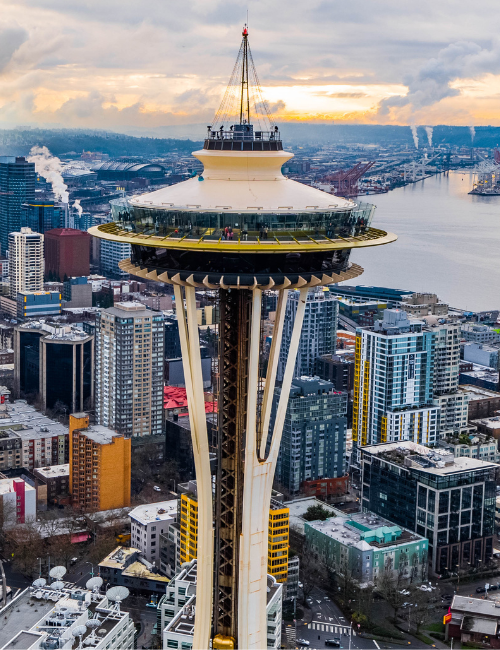
Seattle is a city with an iconic skyline, fabulous culture, and a variety of neighborhoods, each with its own unique character and corresponding challenges. Knowing which neighborhoods are the safest and which are the most dangerous can be important for prospective home buyers, renters, and visitors. This guide by Serious Cash Offer analyzes Seattle’s best and worst neighborhoods and explains them using available crime data along with what residents have shared. We have conducted a detailed analysis to report on the key features of neighborhoods you may want to live in—whether you desire a spacious, family-friendly suburb or an energetic city core—to help you make an informed and confident decision about your potential move or trip.
Exploring Seattle Neighborhoods: An Overview
Seattle is known for its vibrant culture, diverse communities, and stunning natural surroundings. Each neighborhood brings its own personality, adding to the city’s overall appeal for both residents and visitors. From buzzed-about tech hubs to laid-back waterfront views, there are plenty of fun facts and unique qualities that make each area stand out. For those looking to sell property in Washington State, neighborhood features can play a big role in a home’s value and the overall selling process. Understanding local safety, cost of living, community vibe, and a few fun facts about the area can help position a property more effectively in the market.
The Diversity of Seattle Neighborhoods
The City of Seattle, Washington, is home to many neighborhoods, each with distinct qualities and attributes. The neighborhoods are one of Seattle’s biggest draws, integrating many other communities with diverse backgrounds and experiences. Many neighborhoods across the Seattle metropolitan area offer residents unique living experiences, from urban areas to quiet suburban neighborhoods. This gives a lot of diversity, and with it a lot of choice, to those who decide to live in the Seattle area. Those who live in neighborhoods like Capitol Hill, one of Seattle’s most urban areas, can enjoy the lively atmosphere and the many art and entertainment options it offers. This area also has a very welcoming and inclusive ambience. By comparison, neighborhoods like Magnolia are much quieter, offering a peaceful respite from the Seattle metropolitan area while still allowing residents to enjoy the urban amenities the city offers.
Selling houses in Seattle and understanding which aspects of different neighborhoods appeal to other buyers involves understanding the various influencing factors. Excellent public schools and lower crime rates reflect a family’s peace of mind, which the city strives to provide in family-friendly community areas. When selling a home in Seattle, it is helpful to outline the neighborhood’s favorable characteristics. The variety of neighborhoods in Seattle enhances the living experience and increases home value, making it a good investment. Homeowners should capitalize on the neighborhood experience Seattle offers families and outline the factors that make each neighborhood unique.
Factors to Consider When Selling a Home
There are a range of factors that contribute to selling a home in the greater Seattle area. The first one of these is selling a home in a safe neighborhood. Buyers will want to look for safe neighborhoods when purchasing a house, making it that much more important to analyze the area’s crime rates. The house’s price point is another main concern for buyers. Different neighborhoods of Seattle have vastly different price ranges because some areas are more valuable due to their proximity to schools or large employers. These facts mean that when selling a house, it is important to price it accurately and competitively, and to analyze similar houses in the neighborhood to develop a better pricing strategy.
Neighbourhood traits can help attract potential buyers. What lifestyle does the area provide? What amenities does it have? Parks, stores, and gyms may help sell the property. Also, understanding market trends in the Seattle area is crucial. Emerging economies and new infrastructure may attract new residents and, consequently, increase demand for housing. It is essential to focus on neglected areas of the neighborhood that may be subject to change and will increase demand and sellability as the Seattle market continues to change.
Here are additional tips to consider when preparing your home for sale in Seattle:
- Describe desirable local events that help create a sense of community.
- Highlight local parks and recreation centers to appeal to those with an active lifestyle.
- Prominently display any recent upgrades made to the local neighborhood to entice potential buyers.
- Outline local transportation options for commuters, such as train stations and express bus lines.
- Describe local restaurants, shops, and cultural spaces that contribute to a dynamic living environment.
- Highlight passive solar design and other eco-friendly amenities to attract buyers concerned with environmental issues.
- Describe the local school system, emphasizing both proximity and quality.
Incorporating these elements into your marketing strategy can significantly enhance your property’s appeal to prospective buyers.
Top Safe Neighborhoods for Home Sellers
| Neighborhood | Safety Highlights | Buyer Appeal | Property Market Strength | Lifestyle Perks |
|---|---|---|---|---|
| Maple Grove | Consistently low incident reports, quiet area | Popular with families and long-term residents | Stable prices, strong resale activity | Local parks, coffee shops, weekend markets |
| Riverside Heights | Active neighborhood watch, well-lit streets | High demand from professionals and families | Rising values, limited inventory | Riverwalk trails, community centers |
| Brookstone Village | Gated sections, visible community patrols | Attractive to first-time buyers | Fast-moving listings, modern housing stock | Playgrounds, fitness centers, retail hubs |
| Oakwood Park | Long-established, low turnover neighborhood | Appeals to retirees and growing families | Consistent appreciation, reliable comps | Green spaces, libraries, walkable blocks |
| Harbor View | Secured residential buildings, monitored areas | Strong interest from investors and relocators | Premium pricing, solid rental performance | Long-established, low-turnover neighborhood |
Why Capitol Hill Stands Out
It is well documented that public schools influence community desirability, particularly for families looking for safe environments for their children. In Seattle, neighborhoods such as Capitol Hill have exemplary public schools and communities that prioritize family safety and well-being. This makes it attractive to families wanting a safe place for their children and quality schools. Outstanding public schools will help the community and the region increase property values as homebuyers look to the area for the great schools.
Seattle schools serve a purpose beyond education. They act as community centers that provide programming that fosters social ties and glues community members together. In proximity to public schools, houses tend to be more expensive, especially in safe neighborhoods. Families, when searching for homes, prioritize safe, community-oriented neighborhoods. In terms of safety and educational access, Capitol Hill stands out as a neighborhood, which justifies its high real estate prices. Public schools are fundamental in improving the community’s appeal and are a significant contributor to real estate prices in Seattle neighborhoods.
Public Schools and Community Appeal
It is a well-established fact that there is a very positive connection between public schools and community desirability, especially among families seeking safe places for their children and schooling. In Seattle, neighborhoods like Capitol Hill provide exemplary public schools and a community focused on the safety and well-being of families. As a result, it is a magnet for families in search of quality schooling and a safe environment for their children. The public schools in the area are first-rate and will help boost property values, as homebuyers will seek the area for its excellent schools.
Educating children is not the only task Seattle schools perform. They are also community hubs that offer activities to bring people together and strengthen relationships among neighborhood constituents. When homes are within walking distance of public schools, sellers are likely to be able to sell for higher prices if the neighborhoods are safe. When families are searching for homes in safe, community-driven neighborhoods, they will focus their search on these attributes. In terms of safety and education, Capitol Hill is a leading neighborhood, which explains the high property value. Public schools are critical to enhancing community desirability and are a major factor in property sales in Seattle neighborhoods.
Understanding Crime Rates in Seattle
Due to crime rates in Seattle, people develop perceptions of the city’s neighborhoods and may make different decisions based on those perceptions. For someone wanting to buy or sell a house, understanding the trends in property crimes and violent crimes is vital. There is great value in the crime information in Seattle. Seattle’s crime data can provide insights into public safety concerns across different geographic areas of the city and how those concerns can affect property values and a neighborhood’s reputation. People who are considering buying or selling a house can examine trends in property values and violent crime, and in doing so, make educated decisions about where to invest or withdraw their money. It would give them a better understanding of the safest and the most dangerous areas of the city.
Analyzing Property Crime Trends
Burglary, theft, vandalism, and other related crimes remain one of the biggest problems for the Seattle area, and these crimes are also most visible from the outside. Trends in property crimes and analyzing them are very important for prospective buyers and sellers in the area. The local crime map offers insight into which areas are more crime-prone, helping buyers assess the level of risk. In addition to socio-economic variables, crime prevention initiatives also affect the level of property crime. The presence or absence of a crime in a neighborhood helps set the values of the properties in that area and the perceived attractiveness of the neighborhood. In these areas, sellers are forced to come up with more creative and effective marketing techniques. On the other hand, areas in which property crime decreases are more likely to see a rise in their property values. Programs that promote and improve the community, as well as effective policing, help to create a more positive environment for everyone.
The Seattle region has various initiatives aimed at reducing property crime, including community watch programs partnering with police. These watch programs are critical for crime prevention and reporting. Communities should promote the community watch program as a selling feature, as it will attract families and individuals looking for a safe place to live. For Seattle-based stakeholders, it is important to understand the trends in property crime as they reflect the perceived safety of a neighborhood and show how it may influence property values.
Violent Crime and Its Impact on Home Sales

Considering where to live in Seattle, one must take into account violent crimes. Assaults and homicides are crimes that take community safety away and impact the local housing market. Potential homebuyers take safety into consideration, looking at violent crime data. There is a violent crime and home sale relationship that is evident, with homebuyers being pushed to the suburbs and away from areas with high violent and total crime. Some areas are currently less violent due to proactive policing, while others are still struggling with violent crime, and this is affecting the demand and prices of housing.
Home sellers in areas with high violent crime are particularly challenged, as buyers’ safety concerns erode interest in the property and lower its value. In order to do this, they can point out community policing, safety enhancements, and improvements that have caused a drop in crime. Crime mapping and data to illustrate the safety of the neighborhood can help sellers understand the value of their neighborhood. Positive data, coupled with data, can create a safety-focused narrative of improvement for the home, increasing its marketability. Knowing the data paired with violent crime allows sellers to focus on less-violent community areas to sell a home.
Challenging Areas: Belltown and Surroundings
Belltown is situated in the core of Seattle , and receives the most attention when talking about safety and crime issues in the city. Even though it is one of the trendiest areas due to its location, Belltown is known to be one of the more difficult neighborhoods in Seattle. Examining the nature of crime, specifically property and violent crime, is important for potential residents and home sellers. We discuss how crime and real estate shape and define the present and future of Belltown and the community as a whole.
Navigating Crime Concerns in Belltown
Belltown’s problematic reputation stems from its rising crime statistics. Being a hotspot for nightlife and cultural venues, the social scene of Belltown seems to ironically add to the crime issue at hand. Safety from theft and violence is of utmost concern. Navigating crime data becomes important for current and future investors. While crime remains a concern, safety, law enforcement, and community groups maintain the overshadowing vibrant impression of Belltown’s image.
Belltown, like many other urban areas, is a victim of its high density and a plethora of potential street crimes. The crime data may leave some inexperienced homebuyers and locals looking for crime statistics, law enforcement crime maps, and information on documented crime locations to make them feel more secure. For homeowners working with a company that buys home in Spokane or in nearby cities, understanding neighborhood trends and safety improvements can play an important role in positioning a property. Feasible community engagement may arise as violence, theft, and vandalism become less common. Initiatives seeking to control crime acts may already be evident in the declining statistics. Potential sellers will need to acknowledge the cultural improvement and the location of the property in close proximity to Belltown and the other cultural attractions of downtown Seattle to combat the crime issues and build social structures. Promoting constructive changes will help market Belltown as a “new” place to live and will benefit investors and residents by allowing Belltown to once again become a “safe” place to live.
| Crime Challenges | Community Efforts | Real Estate Impacts |
|---|---|---|
| Increased theft and vandalism | Neighborhood watch programs | Decreased market values |
| Rising rates of violent crime | Collaboration with local law enforcement | Potential for reduced property demand |
| Drug-related issues | Community outreach and education | Fluctuations in rental yields |
| Homelessness-related disturbances | Support for housing initiatives | Development of safety-oriented projects |
This table illustrates the balance of crime challenges, community initiatives, and real estate dynamics in Belltown.
Familiarizing yourself with Seattle’s neighborhoods can improve your experience in the city, especially if you’re relocating here, considering your current position, or exploring options with cash home buyers in Seattle or in nearby cities. Every area of the city has its own set of features, from the energetic heartbeat of the downtown core to the peaceful charm of the family-oriented neighborhoods. If you want to explore the region’s various sets of features, you may need to be willing to self-explore the region’s neighborhoods. If you want to get a real-world sense of the region’s neighborhoods, explore them multiple times, prioritizing community, safety, and a neighborhood’s vibe.
FAQs
What should prospective home buyers and renters know about Seattle neighborhoods?
As future home owners or renters take time to evaluate the distinctive characteristics of the various neighborhoods across the Seattle area, they should also consider the associated challenges. Neighborhood attributes include, but are not limited to, crime data, safety mechanisms, cost of living, and community atmosphere.
How do neighborhood characteristics impact property sales in Seattle?
Neighborhoods impact property sales through their safety, quality of public schools, and available amenities. These characteristics enhance community attractiveness and may increase the value of properties for sale. Highlighting these characteristics may entice buyers.
Why is safety an important factor when considering purchasing property in Seattle?
The importance of safety can be seen in how it impacts a neighborhood’s desirability and overall value. Properties for sale in high-crime neighborhoods are typically more expensive than those in low-crime neighborhoods.
What makes Capitol Hill a desirable neighborhood in Seattle?
Capitol Hill is known for its cultural diversity, vibrant nightlife, safety, community involvement, and overall vibrance. Its proximity to downtown and range of available properties allow young professionals and families to call the neighborhood home.
How do crime rates influence real estate decisions in Seattle?
Crime rates affect community safety perceptions, greatly shaping real estate market choices. Properties with high crime rates are likely to experience little interest from buyers and, as a direct consequence, will see their property values decline. Conversely, areas with declining crime rates are likely to become more appealing.
Understanding the best and worst neighborhoods in a city can make a big difference when selling your home. Market demand, safety, location, and community reputation all influence how quickly a property sells and at what price. Whether your home is in one of the city’s most desirable areas or a neighborhood that presents more challenges, knowing where it stands helps you choose the smartest selling strategy.
Do you need to sell your home? Sell quickly, avoid costly repairs, or prefer a hassle-free sale. Serious Cash Offer is here to help. We offer fair cash offers, handle all the details, and make the process seamless. Ready to sell or have questions? Contact us at (206) 312-1920 for a no-obligation offer. Get started today!
Helpful Seattle Blog Articles
- How to Sell a House with Title Issues in Seattle, WA
- How to Sell a House with Water Damage in Seattle, WA
- How to File a Quitclaim Deed in Seattle, Washington
- Can You Sell a House with Tenants in Seattle, Washington
- Can You Sell a House with Fire Damage in Seattle, Washington
- Best Things to Do in Seattle, WA with Kids
- Seattle, WA Property Tax Rate
- Is Seattle, WA, a Good Place to Live?
- Seattle, WA Neighborhood Map
- Best and Worst Neighborhoods in Seattle, WA