![how to sell a house during divorce in [market_city]](https://image-cdn.carrot.com/eyJidWNrZXQiOiJwcm9kdWN0aW9uLmNhcnJvdC11cGxvYWRzLm9uY2Fycm90LmNvbSIsImtleSI6InVwbG9hZHMvc2l0ZXMvNTgzOTIvMjAyNi8wNC9ob3ctdG8tc2VsbC1ob3VzZS1kdXJpbmctZGl2b3JjZS5wbmciLCJlZGl0cyI6eyJyZXNpemUiOnsid2lkdGgiOjExNTJ9LCJ0b0Zvcm1hdCI6IndlYnAiLCJ3ZWJwIjp7InF1YWxpdHkiOjcwfX19)


Given that you’ve helped hundreds of Washington homeowners navigate the trickiest situations they’ll ever face, I know that selling your house during a divorce can feel overwhelming. The emotional weight alone can make your head spin, let alone trying to figure out Washington’s community property laws while dealing with lawyers, custody arrangements, and a spouse you’re divorcing.
Here’s what I’ve learned after working with Washington cash buyers and buying homes from countless divorcing couples across King County, Pierce County, and beyond: you don’t have to do this alone. There are clear steps, specific timelines, and options that can make this process manageable.
Let me walk you through exactly what you need to know about selling your house during a Washington divorce, from the legal requirements to your timeline and all the options in between.
Washington State Divorce Property Division Laws and Real Estate Sales
Washington is a community property state, meaning that most assets and debts acquired during a marriage are presumed to be owned equally by both spouses. This includes income earned by either spouse during the marriage, as well as property purchased with that income. As a result, a home acquired while married is typically treated as jointly owned, even if only one spouse’s name appears on the deed, unless a specific legal exception applies.
At the same time, Washington law requires courts to divide marital property in a way that is “equitable.” In practice, this means the court’s goal is fairness, not necessarily a strict 50/50 split. While community property is often divided roughly equally, the final outcome can vary depending on the circumstances of the marriage.
Many people mistakenly think that “community property” automatically means an equal division of property, but that is not true. Judges can take into account each spouse’s financial position, their contributions during the marriage, and their future requirements. Consequently, cases that appear to be the same can be quite different in terms of property division, depending on what the judge considers equitable.
Community Property Rules for Marital Home Sales in Washington Divorce Cases
Your marital home falls under community property rules if it was purchased during your marriage. Community property in Washington State generally includes all assets and debts acquired during a couple’s marriage. It may include the family home, cars, bank accounts, stocks, royalties, credit card charges, and any other assets or debts that accumulated during the marriage.
What if you owned the house before marriage? It gets complicated. For example, if one spouse inherits a vacation home from their grandfather, it is generally considered their own and is unlikely to be included in property division during the divorce. However, assets that were originally one spouse’s separate property can become community property through intentional or inadvertent commingling, such as when one spouse deposits funds into another spouse’s premarital bank account.
The same principle applies to your house. If you bought it before marriage but used marital funds for mortgage payments, improvements, or maintenance, it may have become partially community property.
Legal Requirements for Spouse Consent When Selling a House During Divorce
What many do not know is that Washington is a community property state, where most marital assets (including family homes) are co-owned by both spouses. This classification determines how the property is treated legally when it is time to sell.
Generally, both spouses must consent to the sale and sign the required paperwork to finalize the sale. One spouse typically cannot sell or transfer the home to someone else without the other spouse’s consent. While some other circumstances may be exceptions, they are limited and typically involve litigation to resolve or authorize the sale. You can’t simply decide to list the house on your own if your spouse is on the deed. If both names are listed, both signatures are legally required to move forward. There’s no workaround for that in a standard sale.
If your spouse refuses to cooperate, the situation becomes more complicated. You may need to petition the court for what’s often called a forced sale or partition action. This process can drag out for months, sometimes longer, and it often entails high legal costs. Because of that, some sellers explore faster alternatives. Certain cash buyers, for example, can close in as little as 14 days once all parties (or the court) approve the sale, helping prevent the situation from dragging on further.
Serious Cash Offer provides a faster way to sell a home, even in situations requiring both spouses’ consent under Washington’s community property laws. We can often close in as little as 14 days once all approvals are in place, reducing delays and legal costs.
Temporary Restraining Orders Preventing Spouse From Selling House During Divorce
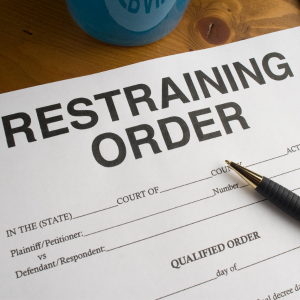
You’re able to request short-term relief from the court during the pendency of a divorce through a motion for temporary orders. This can include, but is not limited to, exclusive possession of the family home, which means you would remain in the home, and in some situations, an order that requires your spouse to leave. The purpose of these orders is to help contain the situation and minimize further disputes while temporary orders are being decided.
Simultaneously, Temporary Restraining Orders (TROs) are frequently granted. In most situations, these are granted, in default, when a divorce petition is filed. They restrain either party from, without court permission, selling, transferring, concealing, or otherwise abandoning any marital property, including the family residence. This type of order usually remains in effect until the divorce is completed or the court alters it.
If you’re concerned your spouse might try to sell the house without your knowledge, TROs provide an important layer of protection. They effectively “freeze” major financial decisions so neither party can act unilaterally. Such protection limits the freedom you would otherwise have to independently pursue a sale, even if you are willing to, unless you follow the appropriate legal steps or get permission from the court.
Valuing Your Home for Equitable Distribution in Washington Divorce Settlement
Getting an accurate home valuation is crucial for fair property division. Meanwhile, the statewide median sales price for a single-family home rose to $626,100 in the first quarter, 9.3% higher than one year earlier. Given the state’s variety of locations and market diversity, median housing prices are highly variable, ranging from $224,800 in Lincoln County to $931,000 in King County.
The market varies dramatically across Washington. King County’s median home price surged to $800,000 in Dec. 2024, marking a 3.2% increase compared to $775,000 in Dec. 2023, according to a recent market report from the Northwest Multiple Listing Service (NWMLS). This upward trend in prices positions King County among the most expensive housing markets in Washington state, trailing only San Juan County, which reported a median price of $849,500 in December.
You’ll likely need a professional appraisal. If the parties want to retain ownership of the assets, they may hire experts or the court may appoint a professional (paid for by the parties) to value the assets. Some couples get multiple appraisals to ensure fairness.
Documentation Needed for Selling Marital Property During a Washington Divorce
You also need to consider the property and financial aspects of the divorce. For that, you’ll need the following documentation: marriage certificate, deed and title documents, mortgage statements and complete payment history, property tax records, any receipts or invoices for home improvements, recent appraisals of the property, and the divorce petition, temporary court order, and the completed financial disclosure documents.
In Washington State, when a divorce is filed, and there are still financial issues, like how property is divided, you and your spouse must do the financial disclosure forms. Both of you must fully disclose your income, expenses, how much you owe, and what you own. The law requires this, so everyone is on the same page about how property and financial responsibilities are divided.
Throughout the divorce process, it is necessary to document property-related expenses as thoroughly as possible. Document who pays the mortgage, property taxes, insurance, utilities, maintenance, and repairs. If expenses are so well documented, disputes are minimized, and each party’s contributions are accurately reflected.
Contact us today to receive a fast, no-obligation cash offer for your property, simple, transparent, and tailored to your situation, with a smooth process from start to finish.
Timeline for Selling Real Estate During the Washington State Divorce Process
Washington has specific timing requirements, including a mandatory 90-day waiting period from the date the petition is filed and served before a divorce can be finalized. This is the minimum amount of time required, even when both spouses agree on all terms, and the process can take longer if there are disagreements or unresolved issues.
The first step in a divorce is filing divorce papers. From there, a person may request temporary orders and begin the process of financial disclosures and valuing the marital property. If both divorcing spouses agree to sell the marital home, this divorce phase may also include preparing the home for sale. After divorce petitions are filed, the remaining divorce process in the months ahead must address negotiating offers, continuing compliance with legal requirements, and resolving remaining disputes with the spouses or ex-spouses involved regarding assets and/or responsibilities. Typically, the divorce process concludes when the marital home is sold, the assets are divided, and the remaining issues are resolved.
Overall, divorce in Washington is often an extensive legal process that typically takes around a year, though it can be shorter or longer depending on the complexity of the case, the level of cooperation between the parties, and court scheduling.
If you need to sell quickly, cash buyers can close in 2-3 weeks, compared to the typical 60-90 days for traditional sales. Companies like Serious Cash Offer specialize in helping divorcing couples by providing fast, fair cash offers that eliminate the uncertainty of traditional sales.
How to Sell Your House During Divorce Proceedings in Washington

You have several options for selling during a divorce, including traditional listing, where you list the property with a real estate agent and market it to potential buyers.
Depending on market conditions, this route usually takes 60-90 days or longer. In November 2024, market moderation was evident in a median days-on-market of 32 days. This does not account for the additional time it may take to get an offer, negotiate the terms, and ultimately, the duration of the closing process, which can greatly extend the overall time frame of the process.
A cash sale means selling to a cash buyer, and the closing can happen as quickly as 2–3 weeks. For divorcing couples, cash sales have special benefits. The solution to a shared asset can be implemented quickly, and cash sales can be completed in 7–14 days, allowing both parties to move on without lengthy discussions or ambiguity. It also eliminates the need for repairs, showings, and buyer contingencies, which is one less source of stress during this difficult time.
When spouses cannot reach an impasse on how to handle the property, the court may order its sale. The court will follow certain guidelines and may have a neutral party manage the sale. Although this option guarantees the house will be sold, it may take the longest, incur the most legal fees, and give the parties the least control.
Managing Mortgage Payments and Joint Debt During Divorce Home Sale
Who pays the mortgage during divorce proceedings can quickly become complicated because both spouses often still have legal and financial obligations tied to the home until the divorce is finalized. In most instances, courts want both parties to maintain the status quo and refrain from any acts that injure communal assets and credit. This avoids further financial harm while the case is pending.
During this process, couples have a temporary obligation to support one another financially, including mortgage payments. This is usually done to protect each spouse’s credit and to protect the equity in the marital home, regardless of whether one spouse is living in the home. These agreements can vary based on court orders or agreements between the parties.
Depending on income and the specifics of the agreement, arrangements will differ. The spouse remaining in the home might pay the mortgage, or both may divide the payment. In other cases, one spouse pays the entire mortgage and later gets a settlement adjustment or a credit, or the housing expenses are paid through temporary spousal support.
Temporary court orders or agreements often clarify who is responsible for the mortgage while the divorce is pending, underscoring the importance of legal guidance. If payments are missed, both spouses’ credit scores can be affected, and the risk of foreclosure increases, significantly complicating the overall settlement.
Court-ordered Home Sales in Washington State Divorce Proceedings
When partners disagree on whether to sell a home, a court can intervene and mandate a home sale. In situations where one partner wants to stay in the home, and the other wants to sell it, the home can be ordered sold, or the court can approve a buyout in which the staying spouse pays the selling spouse based on the home’s fair market value. The court will look at each case and determine what equity and fairness mean in that case, while considering each spouse’s financial situation and contributions, the custody of any children involved, and the feasibility of keeping the home.
Court-ordered sales typically include a court-appointed real estate agent, terms of sale, a court-set timeline, a court-signed final sale amount, and a distribution of proceeds as determined by the court and/or applicable property division rules. In other situations, the court may order the sale to be appraised and allow independent appraisals so that the property’s price is fair and not disadvantage either party.
This process can add significant time, expense, and legal complexity, but it ensures the property is eventually sold and fairly divided when cooperation between the spouses is not possible. It also helps prevent ongoing disputes by establishing a structured and enforceable resolution overseen by the court.
Mediation vs Litigation for Resolving Home Sale Disputes in Divorce
Most divorces in Washington State are resolved through mediation rather than trial. Mediation is a collaborative process that can save significant time, money, and emotional stress by encouraging both parties to work toward mutually acceptable agreements with a neutral third party. It is often preferred because it allows couples to avoid the uncertainty of a courtroom decision.
Mediation benefits include lower costs than litigation, faster resolution, more control over the outcome, and a less adversarial process that can help preserve a workable post-divorce relationship, especially when children are involved. These advantages often make mediation the default first step in many divorce cases. Some spouses also choose to sell the marital home to simplify asset division, sometimes working with a company that buys homes in Tacoma and other Washington cities for a faster, as-is sale.
Litigation is necessary when a spouse refuses to cooperate, there is disagreement over home value, complex property ownership issues exist, or domestic violence concerns make negotiation unsafe or inappropriate. In those situations, court intervention is required to ensure fairness and legal protection. Judges then make binding decisions based on the evidence presented.
Divorce trials can last from 3 days to 3 weeks, depending on the intricacy of the details and the other surrounding circumstances. After all testimonies and evidence have been evaluated and considered, the judge’s decision will be the final order on any outstanding divorce issues. Trials may sometimes be necessary to defend one’s interests; they should be avoided if possible due to the exorbitant costs and emotional toll.
Alternative Options to Selling: Buyout Agreements in Washington Divorce

Instead of selling the house, one spouse can buy out the other spouse’s interest. One spouse keeps the house, and then, through refinancing, trade of other assets, or structured payment, compensates the other for their share of equity. This option is preferred where there is sentimental value and/or children involved, to avoid disruption.
There are many considerations for buyouts, including the current market value, tax consequences, mortgage refinancing, and who will assume future maintenance. Generally, it is very important to consult both attorneys and financial advisors to avoid unanticipated costs and inequitable outcomes.
Assume your house is valued at $500,000, with $300,000 still owing on the mortgage. This means each person owns $150,000 in equity in the house. The person keeping the house would either have to come up with $150,000 on her own or refinance and cash out $150,000 to buy out her partner’s interest. This scenario also does not account for other closing costs, fees, or changes in market value over time.
Tax Implications of Selling Marital Home During Washington Divorce
When going through a divorce and dividing property, taxes can impact how much you take home after the divorce. As a rule, property that is transferred between spouses, or that is transferred as a consequence of divorce, does not result in capital gains or losses. This tax treatment continues for transfers made after the divorce if they are governed by the divorce settlement. However, you should document the transfers as clearly as possible for tax purposes. You should have your tax attorney or accountant confirm that the structuring and reporting of the transfers comply with IRS rules.
While the transfer itself is typically non-taxable, future sales of the property may still result in capital gains taxes. At that point, understanding the property’s cost basis becomes especially important, since it determines how much gain is subject to taxation. The timing of a future sale can also influence the amount of tax owed, particularly if market values change significantly over time.
Because of this, careful planning is essential to manage potential tax exposure. The way the property’s basis is established after the transfer can directly affect the taxable gain when it is eventually sold. By anticipating these implications, you may be able to take advantage of available exclusions or structure a future sale to minimize overall tax liability.
Capital Gains Tax Exclusions for Divorced Couples Selling Primary Residence
The IRS Section 121 exclusion generally allows up to $250,000 of capital gains to be excluded for single filers, and up to $500,000 for married couples filing jointly, when selling a primary residence. To qualify, you must meet the ownership and use tests, meaning you lived in the home as your main residence for at least two of the five years before the sale. It’s important to remember that this is not automatic; you still need to report the sale properly and confirm eligibility.
The timing of a divorce can directly affect which exclusion applies. Your marital status for tax purposes is determined by your status on December 31 of the tax year. If you are still legally married on that date, you may be able to file jointly for that year and potentially qualify for the higher $500,000 exclusion if all other requirements are met.
If the divorce is finalized before December 31, you are generally considered unmarried for the entire year, which usually limits each person to a $250,000 exclusion on their own share of any gain. Because of this, the exact timing of a home sale relative to the divorce can have meaningful tax consequences, and it’s worth planning carefully to avoid unintentionally losing part of the exclusion.
Protecting Your Financial Interests When Selling a House During Divorce
Documenting everything is essential when preparing for a home sale during a divorce. Keep thorough records of all property-related expenses, including mortgage payments, property taxes, insurance, repairs, and any home improvements, along with corresponding receipts and invoices. It’s also important to maintain evidence of the home’s current market value, such as comparative market analyses, appraisal reports, and listing data, as well as clear records of all communication related to the sale and any professional service fees incurred.
Both spouses generally need a clear understanding of the existence, nature, and value of all marital (or “community”) property, as well as any separate property. In many cases, accurately determining the financial value of real estate and other shared assets can be complex and may require the assistance of a qualified appraiser, real estate professional, or financial expert. This helps ensure that property division is based on reliable information rather than estimates or assumptions.
Work with professionals who understand divorce sales. At Serious Cash Offer, we’ve seen how proper documentation and fair valuations protect both spouses’ interests, ensuring a transparent process, smoother transactions, and reduced conflict during an already difficult time.
Frequently Asked Questions:
What Assets Can’t Be Touched During a Washington Divorce?
Inheritance is usually treated as separate property belonging to the recipient spouse. However, it can become complicated if it is left to both spouses, mixed with marital funds, or used as joint property. Generally, assets owned before marriage, individual inheritances, and personal gifts remain separate, but combining them with shared finances may make them subject to division.
What Are the Three C’s of Divorce in Washington?
The “three C’s” are Communication, Cooperation, and Compromise. Washington’s no-fault divorce system encourages mediation instead of adversarial court battles. Mediation can reduce time, cost, and stress, and successful outcomes often depend on clear communication, working together, and a willingness to compromise.
Who Must Leave the House During a Washington State Divorce?
No one is automatically required to move out. Both spouses may stay in the home unless a court orders otherwise, usually for safety or to reduce conflict. Leaving does not affect ownership rights, but it can influence child custody more than property division.
Is It Better to Sell or Keep the House After Divorce?
It depends on your situation. Selling gives a clean financial break, pays off the mortgage, and splits the equity per your agreement. Keeping the home may work if you can afford it on your own, need stability for your children, or expect the value to rise. Consider your finances, credit, and emotional ties when deciding.
Do you need to sell your house? Sell it quickly, avoid costly repairs, or prefer a hassle-free sale. Serious Cash Offer is here to help. We offer fair cash offers, handle all the details, and make the process seamless. Ready to sell or have questions? Call us at (206) 312-1920 for a no-obligation offer. Get started today!
Helpful Washington Blog Articles
- Documents For Selling Your House In Washington
- Who Pays the HOA Fees at Closing in Washington
- Selling an Estate Home in Washington
- How to Sell a Condemned House in Washington
- Can I Sell My House Below Market Value in Washington
- Can I Sell Half Of My House in Washington
- Sell My Flooded House in Washington
- Can a Jointly Owned Property Be Sold by One Owner in Washington?
- Documents Required for Selling Inherited Property in Washington
- How to Sell a House with Title Issues in Washington
- Selling Inherited Property with Multiple Owners in Washington
- Should I Sell My House and Move to an Apartment
- Can My Ex-Partner Sell Our House Without My Approval in Washington?