![companies that buy houses [market_city]](https://cdn.carrot.com/uploads/sites/58392/2025/05/Company-That-Buys-Houses.webp)

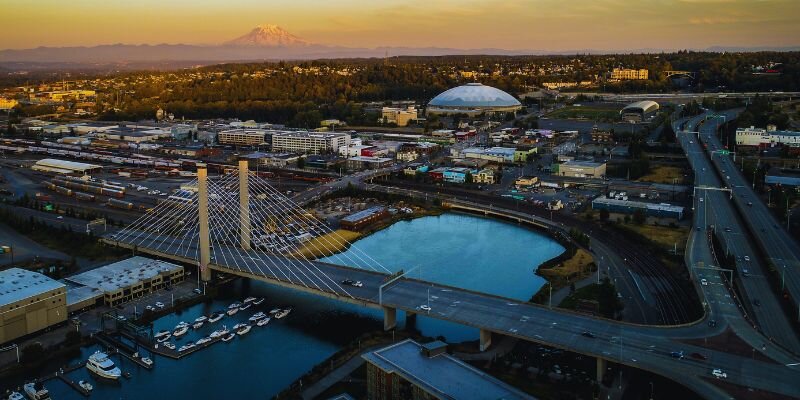
If you pull up a map of Tacoma, you’ll quickly realize this city is anything but uniform. Tacoma packs waterfront districts, historic hilltop neighborhoods, suburban pockets, and industrial zones into about 62 square miles—and they all feel completely different. One minute you’re looking at million-dollar views of Puget Sound, and ten minutes later you’re in a quiet, tree-lined area with modest bungalows and zero traffic.
Tacoma actually offers several free interactive maps that are far more useful than just driving around hoping a neighborhood “feels right.” These maps let you check zoning, school boundaries, property details, parks, and even city planning layers before you ever schedule a showing. If you’re searching for a reliable company that buys homes in Tacoma, give us a call at (206) 312-1920 for a no-obligation offer.
Here’s how Tacoma’s neighborhood maps work—and what you’ll actually find in each part of the city.
How to Access the Official Tacoma, WA Neighborhood Maps and Guides

Tacoma’s mapping tools are surprisingly detailed and very homeowner-friendly. If you like to research before making a big decision, these will be your best friend.
City of Tacoma Interactive Mapping Tools
Go to the City of Tacoma website and look for GIS & Interactive Maps. The main map functions a lot like Google Maps, but with way more layers. You can search by address, zoom in on specific parcels, and click properties to see lot size, zoning, and basic ownership data.
There are also separate maps for parks, trails, transit routes, and neighborhood planning districts. Tacoma’s planning maps are especially useful if you want to know whether an area is targeted for future development or rezoning.
Property Parcels, Zoning, and Land Use Info
The parcel and zoning layers let you see exact lot boundaries and how land is classified—residential, mixed-use, industrial, or commercial. This matters a lot in Tacoma, where zoning can change street by street.
You can also use the map to check shoreline regulations, historic districts, and environmentally sensitive areas. If you’re buying near the water or in older neighborhoods like Stadium or North Slope, this information can save you major headaches later.
Map of Neighborhoods in Tacoma, WA: Geographic Layout and Key Areas
Tacoma doesn’t split cleanly into “north, south, east” the way some cities do, but locals usually think of it in four main zones: North Tacoma, Central Tacoma, South Tacoma, and East Tacoma. Each has its own personality—and price range.
North Tacoma: Proctor District, Old Town, and Stadium
North Tacoma is where the city shows off. This area is closer to Puget Sound, has older historic homes, and generally comes with higher price tags.
The Proctor District is a favorite. You’ve got walkable streets, local coffee shops, grocery stores, and Saturday farmers markets. Homes here are mostly early-1900s Craftsman and Tudor styles, often priced from $550,000 to well over $900,000, depending on updates and proximity to the water.
Stadium District and Old Town lean historic and scenic. Some houses have insane water views, while others are tucked into quiet streets. Prices vary widely, but even smaller homes can command a premium because of location alone.
This area attracts professionals, established families, and retirees who want charm and convenience more than square footage. If you have questions on how to sell your house, check out our process on how we buy a house.
Central Tacoma: Hilltop, North Slope, and Downtown

Central Tacoma is a mix of history, density, and rapid change. Hilltop has seen major investment over the last decade, including the light rail extension, new apartments, and local businesses moving in.
Prices here are still more approachable than North Tacoma, typically ranging from $375,000 to $600,000 for single-family homes. The housing stock includes classic Craftsman homes, duplexes, and newer infill builds.
North Slope sits right next to downtown and has a strong historic identity. Homes here are beautifully preserved, but prices reflect that—often pushing into North Tacoma territory.
Downtown Tacoma offers condos and apartments with walkability to museums, breweries, and waterfront attractions. It’s popular with young professionals and people who don’t want yard work.
South Tacoma: Manitou, South End, and Lincoln District
South Tacoma is more residential and budget-friendly, with larger lots and fewer tourists. Neighborhoods like Manitou and the broader South End feature mid-century homes, ramblers, and quiet streets.
Home prices here often fall between $350,000 and $525,000, making it one of the more accessible areas for first-time buyers. The Lincoln District adds cultural flavor, especially known for its strong Asian food scene.
This part of Tacoma appeals to families, tradespeople, and buyers who want space without paying North Tacoma prices.
East Tacoma: McKinley, Salishan, and Emerging Areas
East Tacoma is one of the city’s most diverse areas and also one of the most misunderstood. Some pockets are still rough around the edges, but others—like Salishan—have seen major redevelopment. As trusted cash home buyers in Washington, this is an area we pay close attention to.
Prices here remain some of the lowest in the city, often $300,000 to $450,000, depending on condition and location. Investors and long-term buyers are watching East Tacoma closely because of its growth potential and proximity to freeways.
McKinley Hill, in particular, offers great views and older homes that are slowly being renovated.
Housing Market and Affordability Across Tacoma Neighborhoods
Tacoma isn’t cheap, but it’s still more attainable than Seattle—and that’s why so many buyers end up here.
Price Ranges by Area
North Tacoma sits at the top, often $600K+. Central Tacoma lives in the middle, while South and East Tacoma offer the most affordable entry points.
Condos downtown can dip into the low $300Ks, while single-family homes in East Tacoma still occasionally sell under $350K—something that’s basically impossible in Seattle.
Tacoma vs. the Greater Puget Sound
Tacoma’s median home price remains significantly lower than Seattle, often by several hundred thousand dollars. You’re trading a longer commute for more space, character, and sanity.
For many buyers, that trade-off is absolutely worth it.
Schools, Amenities, and Lifestyle by Neighborhood
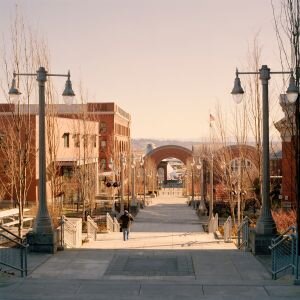
Tacoma offers a strong mix of urban access and outdoor living.
School Districts and Education
Tacoma Public Schools serve most of the city. Like any urban district, school quality varies by neighborhood, and many families research individual schools rather than the district as a whole.
There are also several charter schools, private options, and magnet programs, especially near North and Central Tacoma.
Parks, Waterfront, and Recreation
Tacoma shines when it comes to parks, making it easy for families to find year-round activities for kids. Point Defiance Park alone is massive, offering trails, beaches, and a zoo, while Ruston Way features waterfront walking paths, nearby dining, and beautiful mountain views on clear days.
Best of all, parks are scattered throughout every neighborhood—not just the expensive ones—so families can enjoy outdoor fun close to home.
Choosing the Right Tacoma Neighborhood for Your Lifestyle
Tacoma works because it attracts very different types of residents—and there’s room for all of them.
Best Areas for Young Professionals
Downtown, Stadium District, Hilltop, and parts of North Tacoma offer walkability, nightlife, and access to transit. These areas are ideal if you work hybrid or commute north occasionally.
Top Neighborhoods for Families
Proctor, South Tacoma, and Manitou are popular with families thanks to quieter streets, larger lots, and nearby schools and parks.
Areas for Retirees and Empty Nesters
North Tacoma and Central Tacoma attract retirees who want charm and amenities without suburban sprawl. Condos near the waterfront are also a strong draw for low-maintenance living.
Key Takeaways: Tacoma, WA Neighborhood Map
Tacoma is a city of contrasts. North Tacoma offers charm and views, Central Tacoma blends history with growth, South Tacoma provides affordability and space, and East Tacoma holds long-term potential. Using Tacoma’s free GIS and neighborhood maps can help you understand zoning, schools, and future development before you commit.
If you want, I can also:
- Add real price stats and appreciation trends
- Insert a seller or investor CTA
- Tighten this for SEO or location pages
- Rewrite it to sound even less blog-like and more local
Need to sell your home quickly and hassle-free? Whether you’re trying to avoid costly repairs, skip realtor commissions, or just want a straightforward sale, Serious Cash Offer can help. We make the process easy—reach out today to get started!
Helpful Tacoma Blog Articles
- Selling Your Tacoma, WA Home Below Market Value
- Sell a House After 2 Years in Tacoma, WA
- How to Sell a House in Tacoma, WA
- Should I Replace My Roof Before I Sell My House in Tacoma, WA?
- Tips for Selling a House with Pets in Tacoma, WA
- How to Sell a House While Living in It in Tacoma, WA
- Can You Evict a Tenant if You Sell Your House in Tacoma, WA?
- Selling a House with Solar Panels in Tacoma, WA
- How to Sell an Apartment for Cash in Tacoma, WA
- How to Sell a Parent’s Home After Their Passing in Tacoma, WA
- Selling a House With a Child Support Lien in Tacoma, WA
- What to Know About Selling a Parent’s Home After Death in Tacoma
- Tacoma, WA Neighborhood Map
- Do You Need a Deed to Sell a House in Tacoma, WA?
- Do I Need to Paint My House in Tacoma, WA