

Most people outside the state picture Washington as gray and drizzly, never truly frozen. Then they drive over Stevens Pass in January and watch the thermometer on the dash fall twenty degrees in an hour. The coldest cities in Washington sit east of the Cascades, and owning a house there in winter is a different job than owning one in Tacoma. If you’re thinking about selling in one of those towns, the cold shapes your timeline, your buyer pool, and the repairs a buyer will ask about.
What Are the Coldest Cities in Washington
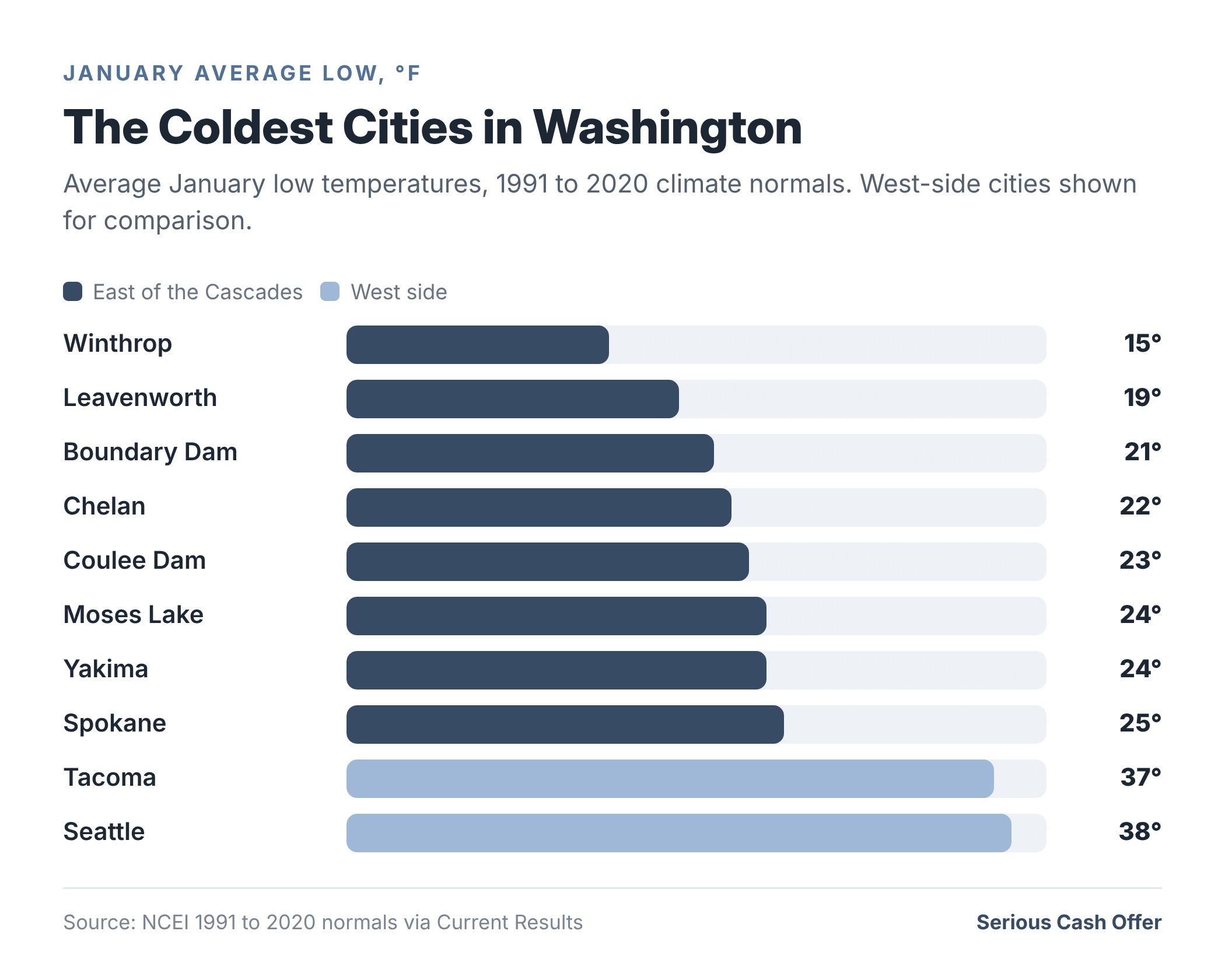
Winthrop takes the title. Its average January low is 15 degrees Fahrenheit under the 1991 to 2020 climate normals, colder than any other town on the state list. Leavenworth comes next at 19 degrees, followed by the Boundary Dam area near Metaline Falls at 21 and Chelan at 22.
Most of the other coldest cities cluster in the low to mid 20s. Coulee Dam averages a January low of 23. Moses Lake and Yakima both sit at 24. Spokane, the biggest city on the list, comes in at 25.
Compare that with the west side. Seattle’s January low averages 38 degrees and Tacoma’s runs 37, based on the same January temperature normals for Washington. That’s more than a twenty-degree gap inside one state.
Normals are thirty-year averages, so any single winter can run colder. Still, the ranking holds year after year, and buyers who move from the coast to the coldest cities in Washington often learn it the hard way in their first December.
Why Eastern Washington Gets So Much Colder Than the Coast
The Cascades split the state into two climates. Marine air off the Pacific keeps Seattle and Olympia mild, though the mountains block most of it from reaching the interior. East of the crest, Arctic air pours down from British Columbia and settles into valleys like the Methow and the Okanogan.
Washington set its all-time record that way. Mazama and Winthrop both hit 48 degrees below zero on December 30, 1968, according to the Office of the Washington State Climatologist. Both towns still sit in the coldest cities ranking more than fifty years later.
Valley floors make it worse. Cold air is heavy, so on clear winter nights it drains downhill and pools in the bottomlands. A house on the valley floor in Winthrop can run several degrees colder than one on the bench above town.
Buyers notice it, too.
Houses with a south-facing slope and good sun exposure show better in February than one tucked into a shaded draw, even when the two are a mile apart.
How Winter Changes Home Sales in Washington’s Coldest Cities
Showings slow down when driveways disappear under snow. Fewer sellers list from December through February in the coldest cities, which are among the slower months to sell in Washington. Fewer buyers drive mountain passes to look at houses, too.
Is that bad news for you? Not necessarily.
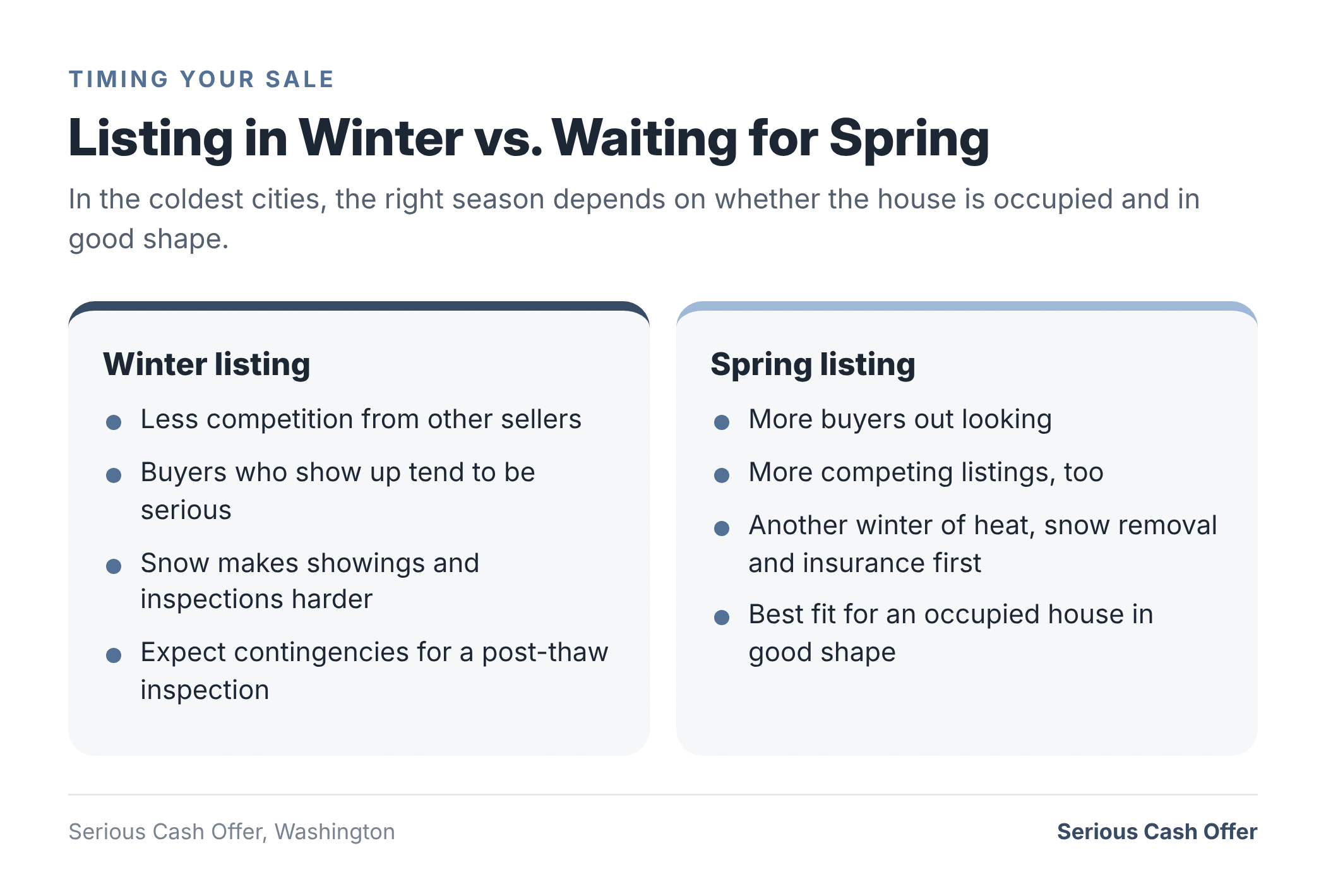
Less competition means your listing stands out, and the buyers who do show up in January tend to be serious. Many are relocating for a job or have already sold somewhere else.
On a Thursday morning a couple of winters ago, a landlord in Moses Lake called me about a vacant rental. The furnace had quit over a holiday weekend and a supply line burst in the crawlspace. She didn’t want to manage a flooring crew from Seattle while the house sat empty, so selling in Moses Lake as-is made more sense to her than rebuilding first.
Snow also hides things. A roof under two feet of powder can’t be inspected well, and neither can a sloped yard or a septic drain field. Buyers and their inspectors know that, so expect contingencies that let them come back after the thaw.
What Buyers Inspect on Houses in the Coldest Cities
Heat comes first.
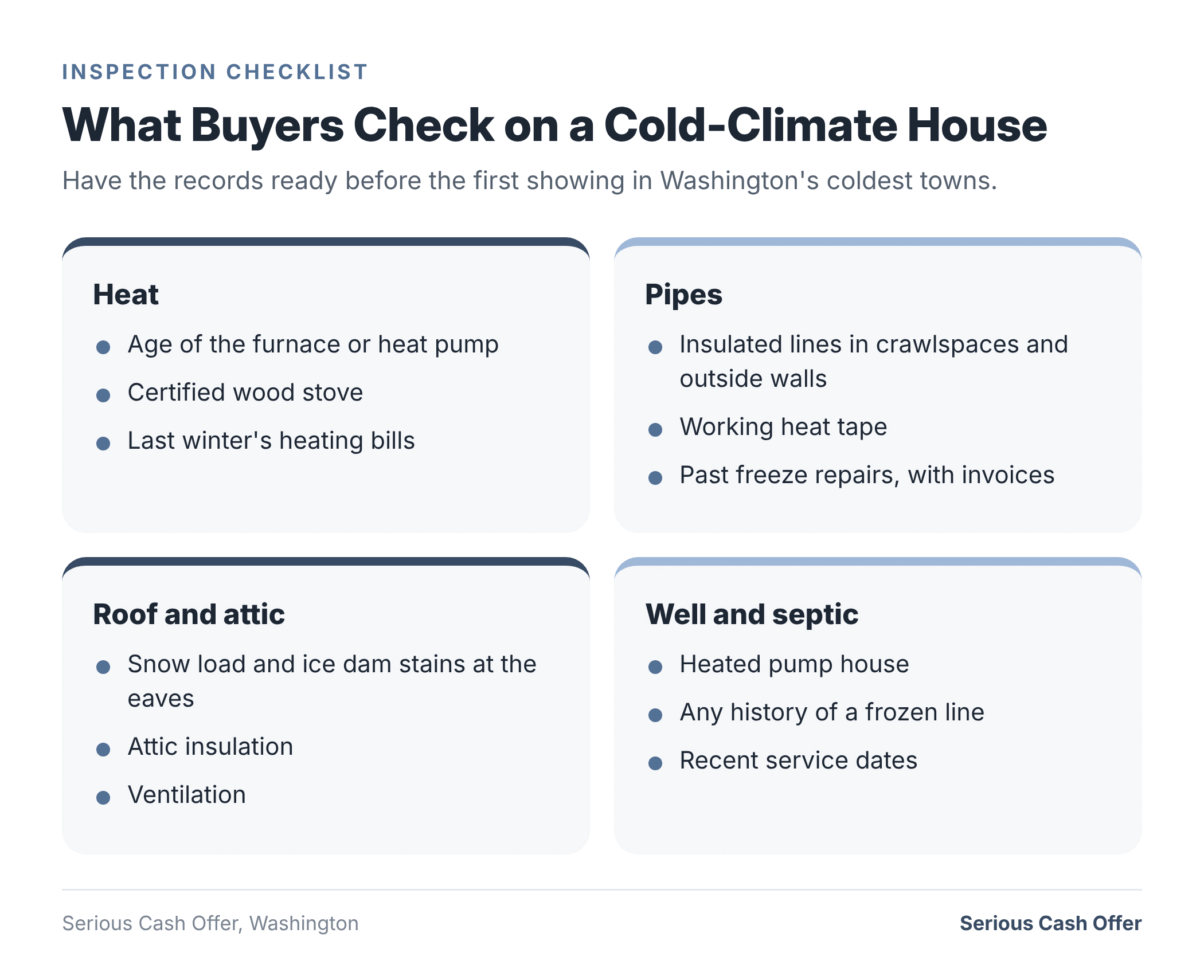
A buyer in Winthrop or Leavenworth wants to know the age of the furnace or heat pump, whether a wood stove is certified, and what last winter’s heating bills looked like. Have those bills ready, because a buyer who sees real numbers worries less than one who has to guess.
Pipes come next. Inspectors look for insulation on supply lines in crawlspaces and exterior walls, heat tape that still works, and signs of past freeze damage. A dated plumbing repair with an invoice reassures people far more than a fresh patch with no story behind it.
Roofs in the coldest cities carry snow load, and ice dams form where heat leaks through a poorly insulated attic. Brown stains along the eaves tell a buyer exactly where to look. Attic insulation and ventilation get the same scrutiny, since they decide how much heat escapes.
West-side Washington buyers moving east often haven’t owned a house with a wood stove or a well, so they ask basic questions. Answer them plainly. One page listing the furnace age, the last chimney cleaning, the pump’s service date, and how you winterize the plumbing saves your agent a dozen phone calls.
Rural properties add wells and septic systems. A well pump house without heat, or a septic line that froze once, will show up in an inspector’s notes. Already handled any of this? The paperwork helps you. Otherwise, it may be time to weigh selling a house that needs repairs rather than chasing every item before you list.
Should You List in Winter or Wait for Spring
Spring brings more buyers to the coldest cities in Washington, and it also brings more competing listings. Waiting isn’t automatically the better move. Holiday weeks are the quietest stretch of the year, though relocation buyers keep searching right through them.
Look at Spokane. The county’s median sold price was $610,000 with 58 median days active in late October 2026, according to Beyond Real Estate’s NWMLS report. Statewide, homes sold in a median of 33 days over the same stretch. So Spokane sellers were already waiting longer than the state average heading into the cold months.
Carrying costs matter here. Every winter month you hold a house in the coldest cities means another heating bill, snow removal, and insurance on a property that may sit empty. For a vacant house, that risk climbs, because a single furnace failure can turn into a burst pipe within days.
My rule of thumb is simple. An occupied house in good shape usually does better with a spring listing. If it’s vacant, needs work, or you’ve already moved, the math often favors selling sooner. The calendar looks different once you count what winter costs you.
What Cold Weather Damage Costs Washington Sellers
Frozen pipes are the most common winter problem I see in the coldest cities. Water expands as it freezes, a line splits, and the leak only shows up once things thaw. By then the subfloor, insulation, and drywall can all be soaked.
Ice dams do slower damage.
Meltwater backs up under shingles, seeps into the attic, and stains ceilings along exterior walls. Left alone, it rots roof sheathing and feeds mold.
Washington’s seller disclosure statement asks about past leaks, water damage, and repairs, so a winter problem becomes part of your sale either way. Disclose what you know. Buyers are far more forgiving of a documented, repaired issue than of one they discover on their own.
Insurance claims can complicate the picture. Any recent water claim may show up when a buyer shops for coverage, and some insurers look harder at homes with a history. Keep every invoice and claim record together for that reason.
Some owners would rather not file a claim or manage a repair crew at all, and how our process works may suit them better.
When You Want to Leave the Coldest Cities in Washington
How long do you want to keep shoveling? Plenty of homeowners in the coldest cities reach a point where shoveling the roof and splitting firewood loses its charm. Retirees in Chelan and Spokane often tell me they want to be closer to grandkids, or somewhere they don’t have to drive on black ice.
Moving out of state in the middle of a sale adds its own pressure. You may be paying two mortgages, coordinating movers, and managing a house from hundreds of miles away. Our guide on how to sell your house and move out of state covers that juggling act in more detail.
Timing the move around winter helps.
Leaving a house empty in January in one of the coldest cities in Washington is how small problems become expensive ones. Keep the heat on, have someone check the place weekly, and shut off water at the main if it’ll sit for long.
Can You Sell a Cold-Climate House As-Is in Washington
Yes, and a lot of owners in the coldest cities do. Selling as-is means you skip repairs, showings in the snow, and the wait for spring buyers.
Last winter I walked through a cabin outside Leavenworth where the owner had plowed the driveway just so I could get up the hill. The wood stove was the only heat source, and a corner of the kitchen ceiling showed an old ice dam stain. He’d inherited it, lived on the west side, and didn’t want another winter of worrying about it.
That’s where a cash buyer fits. Serious Cash Offer buys houses across the state, including the colder towns east of the mountains, without asking you to fix the furnace or patch the ceiling first.
A cash sale won’t be the right choice for every house. If yours is in great shape and you can wait for spring, listing may net you more. Choose based on your situation, not the weather report.
Frequently Asked Questions
Which City in Washington Has the Coldest Winters?
Winthrop, in the Methow Valley, tops the list of the coldest cities in Washington with the lowest average January temperatures of any town on the state’s climate list. Mazama, a few miles up the valley, shares the state’s all-time record low with Winthrop. Leavenworth and Chelan aren’t far behind.
Is Spokane Colder Than Seattle in Winter?
Yes, by a wide margin. Spokane is one of the coldest cities in the state because it sits east of the Cascades, where Arctic air settles in and marine air rarely reaches. Its winter nights average well below Seattle’s, and it gets far more snow.
Do Houses Take Longer to Sell in Winter in Eastern Washington?
They usually do, because fewer buyers are out looking and snow makes showings and inspections harder. The buyers who are active tend to be motivated, though. A well-priced house can still sell in winter, especially with less competition on the market.
Should I Winterize a Vacant House Before I Sell It?
You should if it’ll sit empty through cold weather. Keep the heat on at a low setting, shut off the water at the main, and drain lines that run through unheated spaces. Have someone check on it every week so a furnace failure doesn’t go unnoticed.
Can I Sell a House with Frozen Pipe Damage in Washington?
You can. Expect to disclose the damage and any repairs on your seller disclosure statement. Some owners fix it first, while others sell as-is to a cash buyer and skip the repair work.
Whether your house sits in Winthrop, Spokane, or anywhere in between, we’re glad to walk through your options with you. There’s no pressure and no obligation. Contact Serious Cash Offer or fill out the form below when you’re ready to talk.
Helpful Blog Articles
- Difference between a short sale and foreclosure
- How to sell a house and move out of state
- Can someone take over my mortgage
- Selling Your Home After One Year: Is It a Good Idea?
- Can an Executor Sell Estate Property Without Beneficiary Approval?
- What Happens If a Seller Refuses to Close on Your Home Purchase
- Should I Remodel My Kitchen Before Selling My Home?
- How Soon After Chapter 7 Can I Sell My House
- How to Find a Realtor in Another State
- How to Get Someone Out of Your House Legally
- Will I Lose Medicare If I Sell My House